- Internal tool
- Automation
- Data & BI
- AI
BelPro InternalSales intelligence on BCE/KBO open data
The internal tool I designed and built during my internship at Lufthansa Group: it detects, qualifies and prioritises newly registered Belgian companies.

Launch film · English voice-over and captions · 1:05
The film, in text
Every day in Belgium, hundreds of new companies are registered. Some could join PartnerPlusBenefit, Lufthansa Group’s loyalty programme for businesses.
Until then, two colleagues searched for them by hand, one website at a time. During my internship at Lufthansa Group, I designed and built BelPro Internal.
Every morning at eight, the tool fetches every company created or updated in the last twenty-four hours.
It completes each record from the web: sector, website, contacts, language.
It checks the programme’s criteria, so no one is missed.
It gives each company a score out of a hundred, with the reasons why.
Then it writes the outreach email, in the right language.
My colleagues just open the tool, copy and send: about five hundred companies sorted every day.
Finally, I connected its data to Databricks and Spotfire, for management’s dashboards. BelPro Internal: collect, qualify, score, write.
At a glance
- new companies processed a day
- ~500
- a day by hand, for two people, before it
- 50–60
- from official data to a prioritised list
- 1 click
The tool, step by step
7 steps, each on one of the tool’s screens. Interface rebuilt for the film, with invented companies and figures.
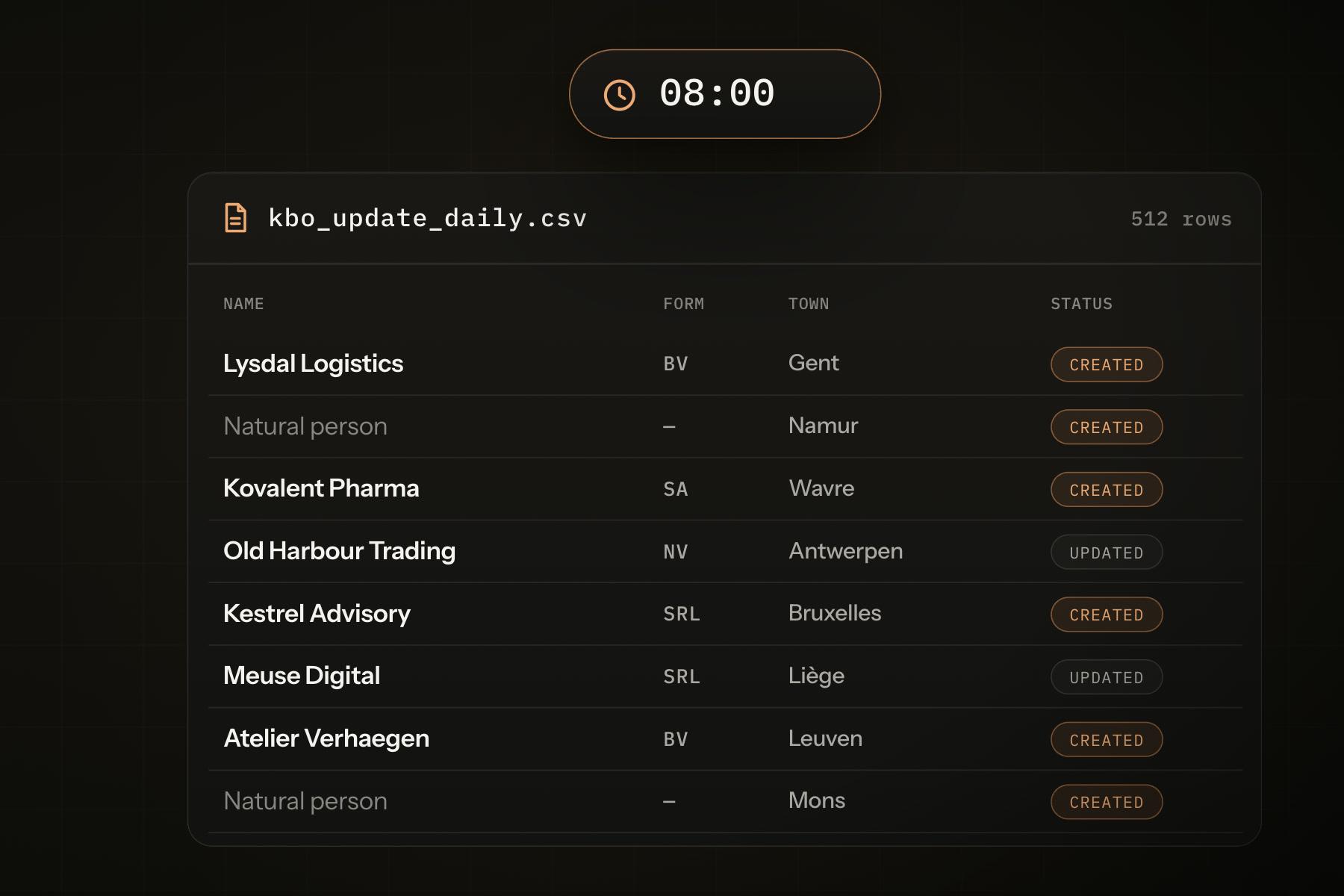
At 8 a.m., the tool fetches the day’s file from the official BCE/KBO register: every company created or updated in the last 24 hours.
- Every morning at 8 a.m.
- The day’s file from the BCE/KBO register
- Created or updated in the last 24 hours
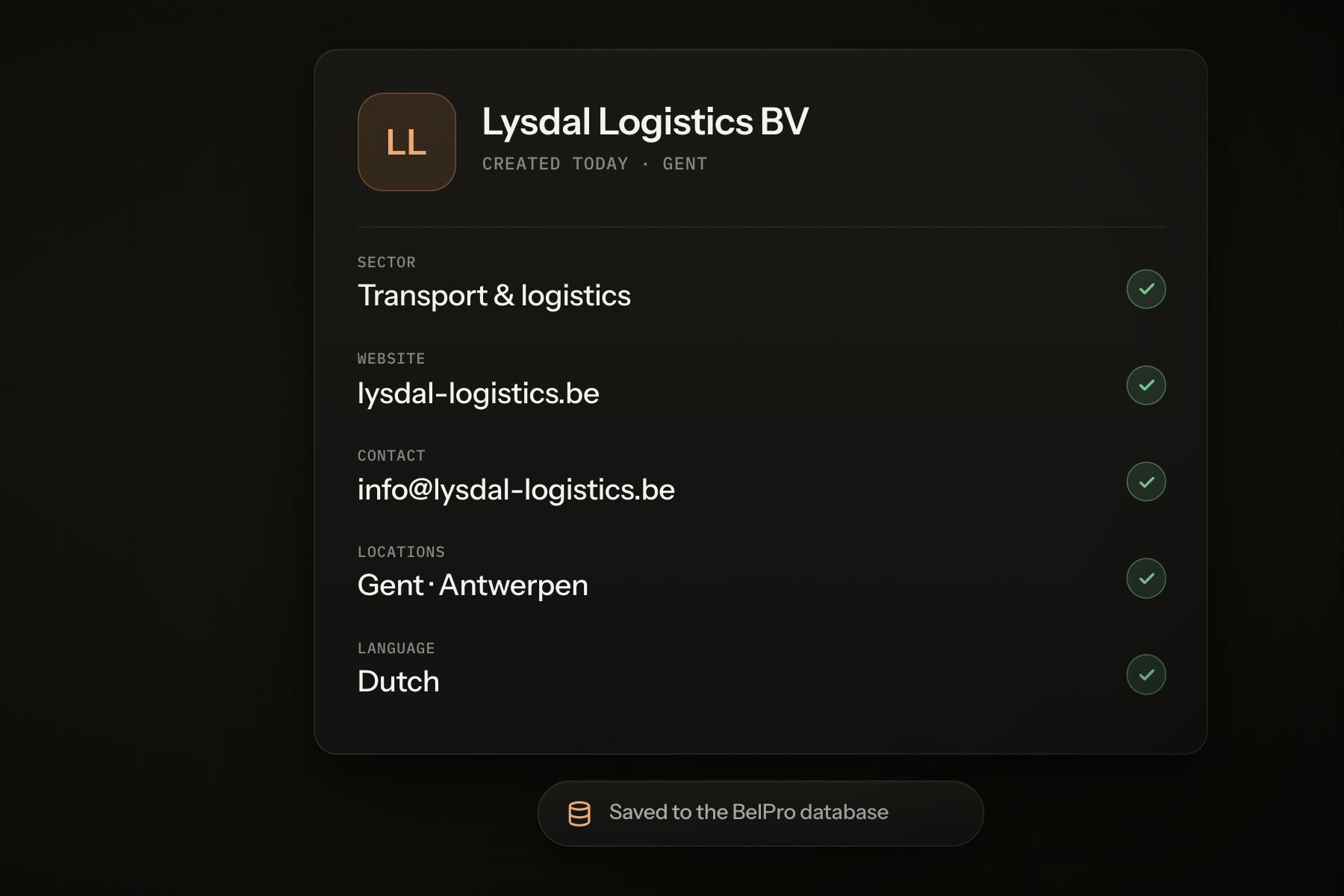
It completes each record from the web: sector, website, contacts and language, saved in its own database.
- The sector
- Its website
- A contact
- Its language, for the email
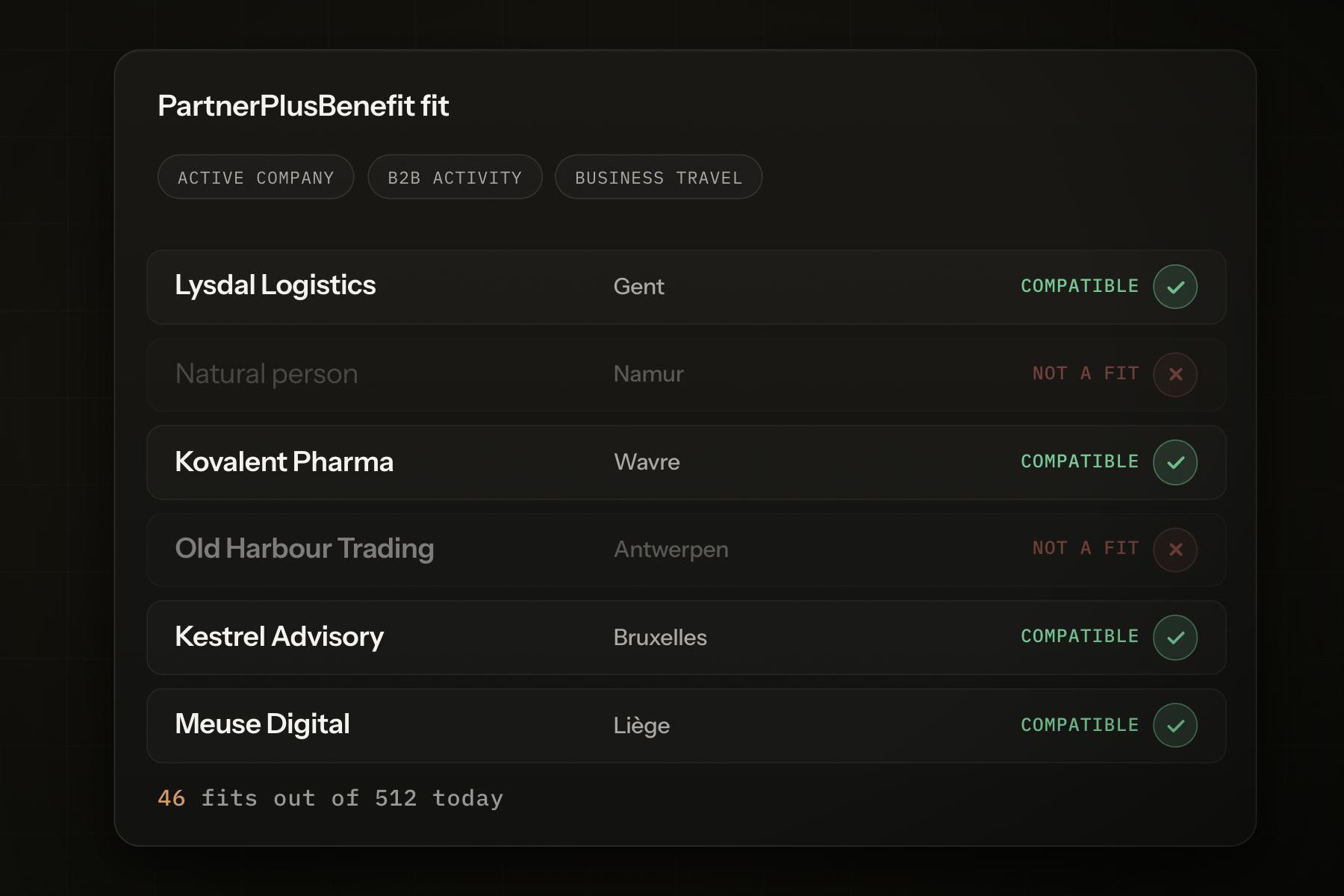
Every company is checked against the programme’s criteria, so no one is missed.
- The programme’s criteria
- A fit: it moves on
- Not a fit: set aside
- The day’s tally
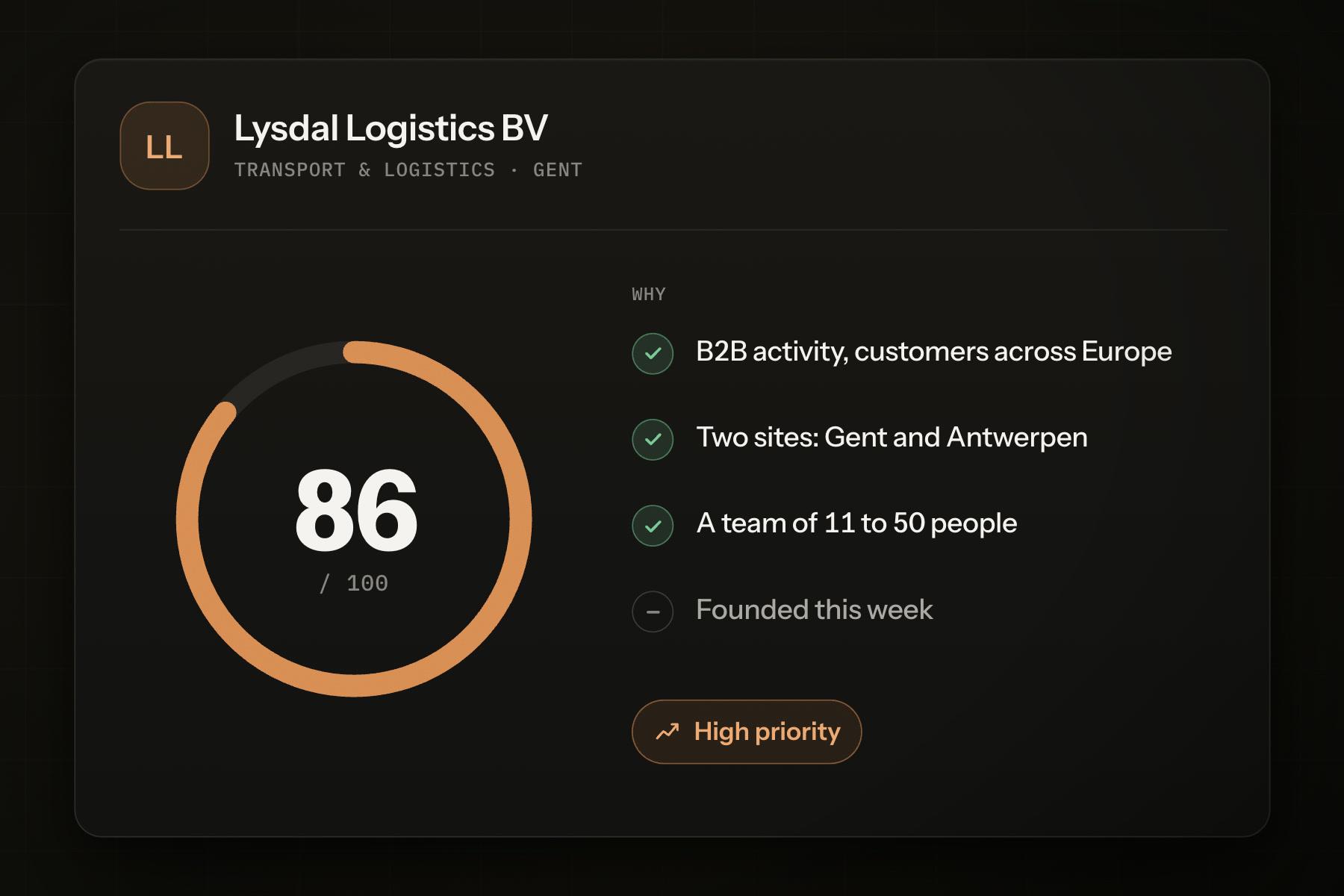
Each one gets a score out of 100 with its reasons, and the best leads rise to the top.
- A score out of 100
- The reasons behind the score
- The priority that follows
Then it writes the outreach email in the language detected for the company: Dutch, French or English.
- The language detected: Dutch, French or English
- The subject, already written
- The email, in the company’s language
My colleagues just open the tool, copy and send: about 500 companies sorted every day.
- The day’s tally
- Prospects ranked by score
- Copy the subject, the email and the address
My tool ran locally: I connected its exports to Databricks and Spotfire, for management’s dashboards.
- The tool, built locally
- CSV exports
- Databricks centralises the data
- Spotfire, the company’s own tool
01 / 07
01 / 07
Collect
At 8 a.m., the tool fetches the day’s file from the official BCE/KBO register: every company created or updated in the last 24 hours.
- Every morning at 8 a.m.
- The day’s file from the BCE/KBO register
- Created or updated in the last 24 hours
02 / 07
Enrich
It completes each record from the web: sector, website, contacts and language, saved in its own database.
- The sector
- Its website
- A contact
- Its language, for the email
03 / 07
Qualify
Every company is checked against the programme’s criteria, so no one is missed.
- The programme’s criteria
- A fit: it moves on
- Not a fit: set aside
- The day’s tally
04 / 07
Score
Each one gets a score out of 100 with its reasons, and the best leads rise to the top.
- A score out of 100
- The reasons behind the score
- The priority that follows
05 / 07
Write
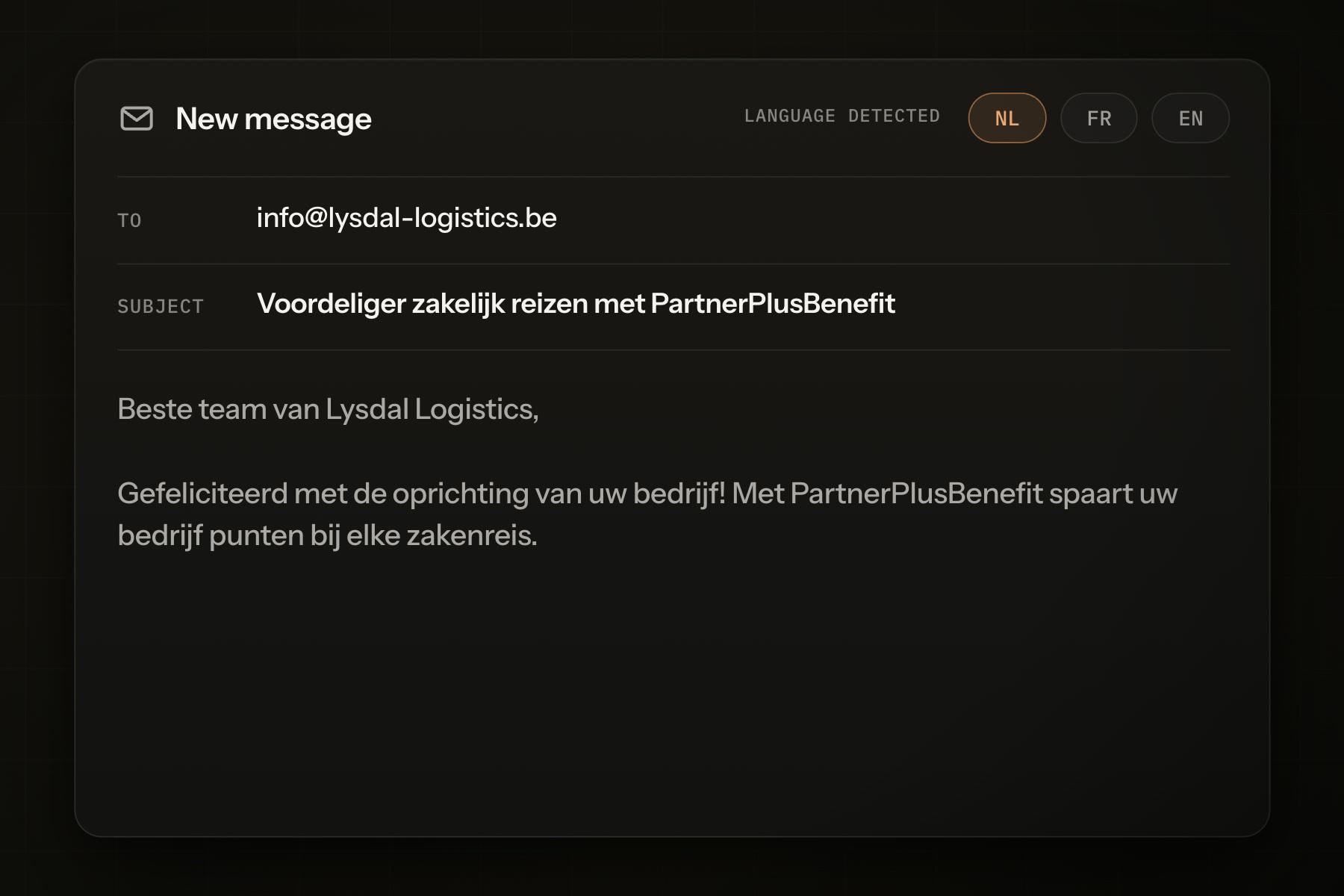
Then it writes the outreach email in the language detected for the company: Dutch, French or English.
- The language detected: Dutch, French or English
- The subject, already written
- The email, in the company’s language
06 / 07
The tool, every day
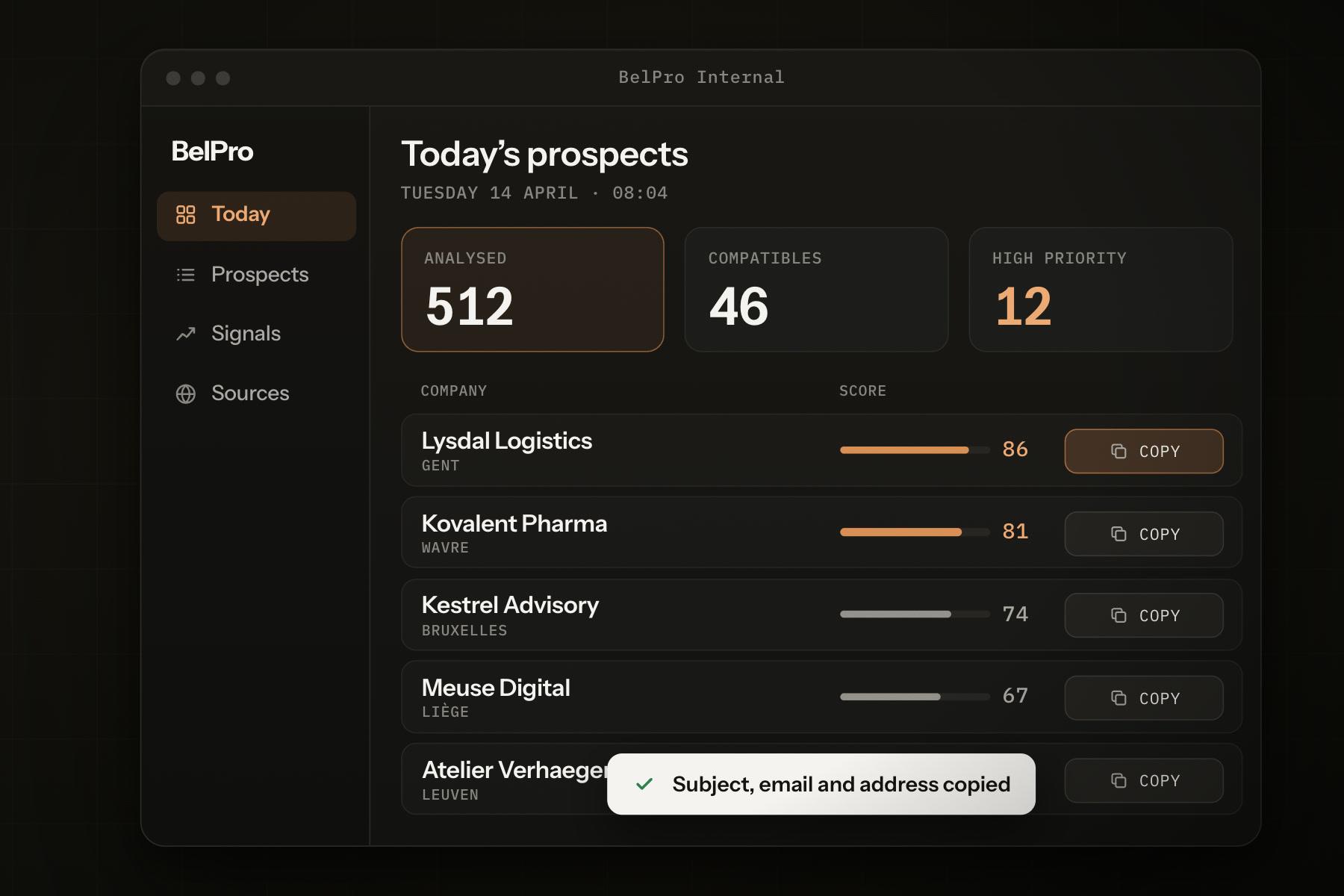
My colleagues just open the tool, copy and send: about 500 companies sorted every day.
- The day’s tally
- Prospects ranked by score
- Copy the subject, the email and the address
07 / 07
Up to management
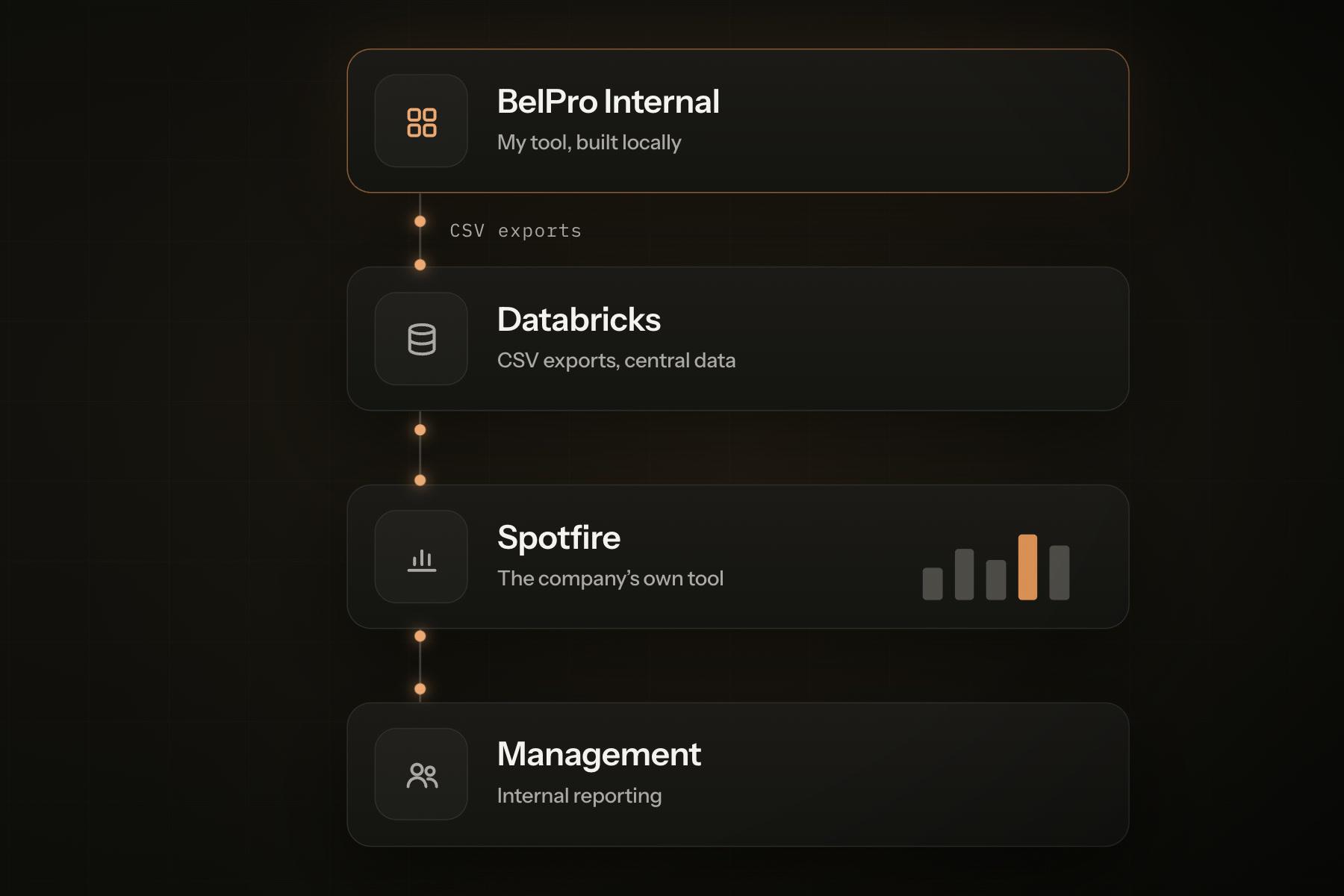
My tool ran locally: I connected its exports to Databricks and Spotfire, for management’s dashboards.
- The tool, built locally
- CSV exports
- Databricks centralises the data
- Spotfire, the company’s own tool
01 / 07
Under the hood
- BCE/KBO open data
- Spotfire
- Databricks
Official data
Newly registered Belgian companies, every day, from the BCE/KBO register.
Qualified, then scored
Automatic enrichment, qualification and scoring, with AI-supported analysis.
Up to management
Exports connected to Databricks and Spotfire, for management's dashboards.
The full case study
My role
Designed and built the solution during my internship: detecting newly registered companies, collecting and structuring the data, enrichment, qualification, scoring, automation and AI-supported analysis.
The problem
The sales teams needed to identify and qualify newly registered companies as potential opportunities, which meant a heavy manual load of collection, verification and analysis.
The solution
An internal tool built on official BCE/KBO data, automating the chain from detection through structuring, enrichment, qualification and scoring to prioritisation, with AI-supported analysis enriching profiles and supporting commercial qualification.
What was hard
The problem was never fetching companies. It was turning raw administrative data into a commercial opportunity a sales team could read and act on.
The outcome
Less manual research, better-structured information, and a sales intelligence process that made qualification and prioritisation legible.